Case Hardened Blue Gem: What kind of pattern is this?
 •
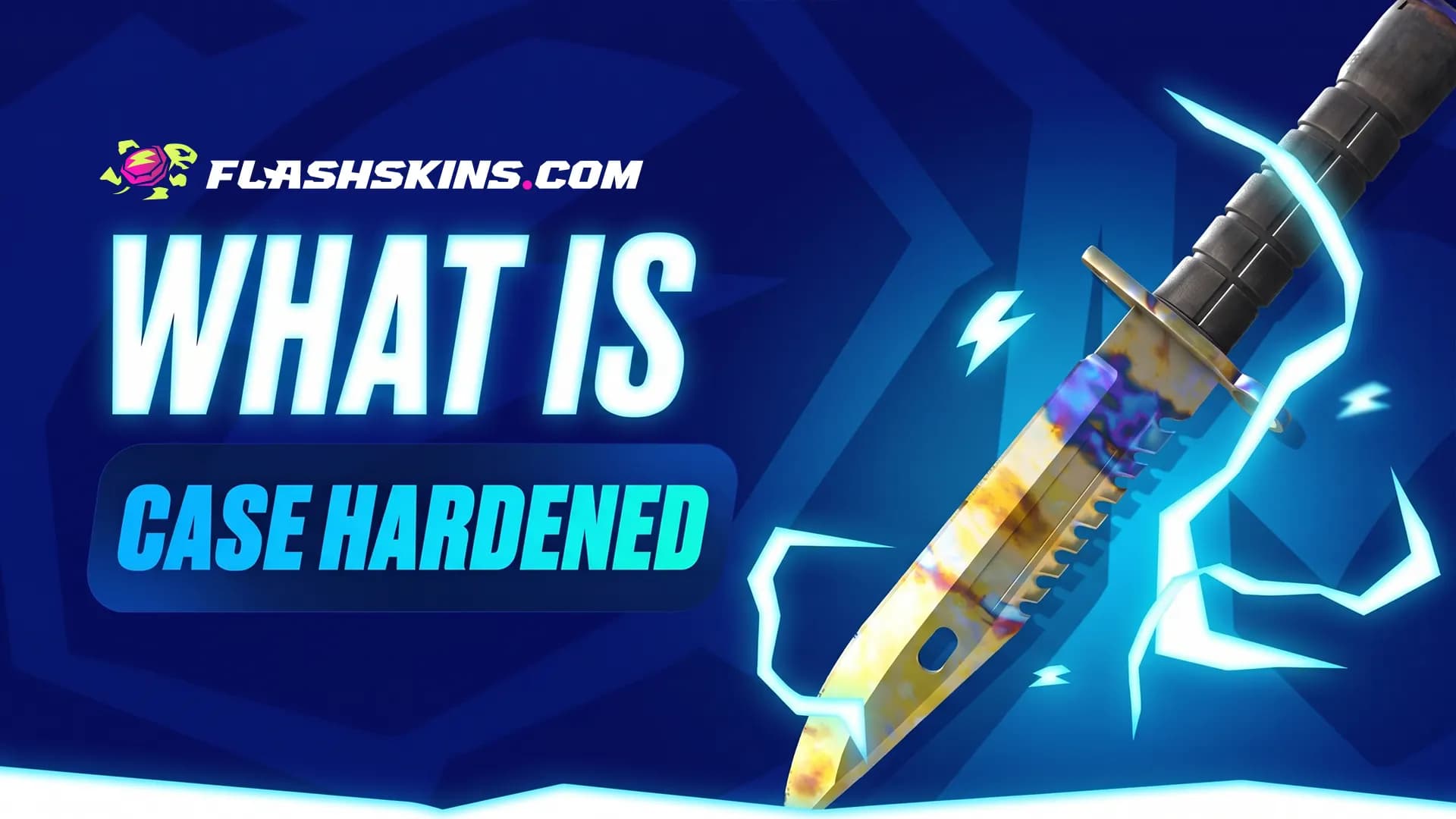
Case Hardened Blue Gem in CS2 - how to spot a valuable pattern and avoid overpaying
You find two AK-47 | Case Hardened skins in Minimal Wear condition. Same weapon, similar float, identical wear name. Yet one listing costs significantly more. Only during inspection do you notice the difference: the first is mostly gold, while the second has an extensive blue surface.
With Case Hardened, these details matter a lot. The skin name and wear category alone won't tell you whether a particular example deserves a collector's premium.
In this guide, you'll learn about Case Hardened Blue Gem from the perspective of appearance, patterns, and pricing. We'll explain what famous seeds mean, differences between models, and how float affects value. You'll also discover where these items come from and how to verify a listing before buying. At the end, we'll return to the trap that makes it easy to overpay: treating the label "Tier 1" as a confirmed price guide.
What is Case Hardened in CS2?
A metallic finish with a distinctive color mix
Case Hardened is a finish inspired by the look of heat-treated metal surfaces. It blends blue, gold, purple, and darker steel tones. What matters most in-game is how the pattern gets distributed across a specific model.
Two examples of the same finish can have drastically different color layouts. One might show a large blue surface, another more gold, and a third a mix of small patches.
The Case Hardened family includes select firearms, numerous knife models, and Hydra Gloves. The shared name doesn't mean identical appearance or a single pattern classification system for all items.
The same motif looks different on various models
An AK-47 has a different shape and surfaces than a Five-SeveN or Karambit. That's why even the same seed number doesn't produce the same effect on them.
When evaluating, you always need to combine three pieces of information: model, finish, and seed. A number alone, without context, tells you nothing about whether an item is exceptional.
How does the Case Hardened pattern work?
Seed determines the pattern variation
Pattern seed, also called paint seed or pattern index, is a number used to distribute textures on an item. In simple terms, you can think of it as choosing different fragments from the same colored sheet.
Item data includes values from 0 to 1000. Popular rankings listing 0-999 don't cover the entire possible range. You also shouldn't assume every acquisition method generates all values identically.
The seed doesn't change during gameplay, when you sell, or when you trade the skin. When you buy a specific example, you're buying the pattern layout assigned to it.
A higher number doesn't automatically mean a better pattern
Seed #900 isn't inherently more valuable than #100. The number identifies a variant, but it doesn't rank it.
What can justify a premium is the appearance that a given seed creates on a specific model. Location of colors, buyer interest, and comparable examples matter.
Pro tip: before diving into rankings, check the title. A list for the AK-47 won't help you evaluate a Karambit, even if the same numbers appear in both.
What is a Case Hardened Blue Gem?
A community term, not an official Valve variant
Blue Gem is a term the community uses for especially desired blue patterns on Case Hardened skins. It's not a separate official wear category, rarity class, or a finish name given by Valve.
Finding any blue patch isn't enough. Collectors evaluate its size, continuity, placement, and the presence of gold and darker fragments.
There's also no specific blue percentage that automatically qualifies all models as a Blue Gem. The possibilities for pattern distribution differ on a small blade, a wide knife, and a rifle body.
Playside and backside - why the item's side matters
Playside is the side you see in typical in-game views. Backside is the other side, visible during inspect and in other contexts.
The position of blue can matter more than its total amount. An example with an attractive surface on the playside might attract more interest than a piece with similar blue coloring mainly on the back.
Pro tip: view both sides and check the knife in animations. The photo the seller chose might show the most favorable angle, which you rarely see during a regular round.
How do Blue Gem tiers work?
Tier is a ranking within a specific classification
Community rankings often divide patterns into Tier 1, Tier 2, and subsequent groups. The highest tier usually includes particularly desired blue layouts for that model.
This isn't a unified Valve system, however. Lists can differ in criteria, scope, and how they assign borderline patterns.
Adding "Tier 1" to a listing doesn't confirm its classification or price. Check which ranking the label comes from and whether it applies to the correct model.
Blue percentage isn't a universal value metric
Tools can measure different regions or recognize shades differently. Results covering the entire surface may not match what you see on the playside.
Two similar percentages don't guarantee equally attractive appearance. A fragmented blue surface, a gold patch in a visible spot, or heavy wear can change how you assess an example.
AK-47 | Case Hardened #661 - why is it so iconic?
The Scar and a recognizable blue pattern
Seed #661 is among the most famous patterns for AK-47 | Case Hardened. It's associated with the name The Scar and features a large blue surface with a characteristic gold element.
Its recognition comes from appearance, years of presence in collector culture, and the AK-47's own popularity. This is an example of a pattern you can't price solely based on the cheapest regular Case Hardened listing.
That doesn't mean every #661 costs the same, though. Float, StatTrak status, stickers, and the history of a particular example can significantly shift the valuation.
Reports of sales exceeding one million dollars
In June 2024, public reports emerged about the sale of a StatTrak Factory New example with the #661 pattern for over $1 million USD. The exact final amount wasn't publicly disclosed.
This information concerns a specific example and a historical transaction, not the current price of every AK #661. We cite the amount in the currency referenced in reports, without converting it to other currencies based on arbitrary exchange rates.
A famous seed, Factory New condition, and StatTrak create a different benchmark than a regular example for everyday play. Don't transfer this combination's price to an item that has only one of these features.
Karambit | Case Hardened #387 - listing is not the same as sale
Nearly entirely blue playside
Pattern #387 is one of the most recognizable Karambit Blue Gems. It's renowned for an almost entirely blue blade side visible during play.
Valuation still depends on float, blade edge appearance, variant, and the specific example. The number alone doesn't mean all examples have identical value.
What does the $1.5 million story really mean?
In 2021, reports described a rejected purchase offer for a Factory New example valued at approximately 1.2 million EUR in Bitcoin, presented at the time as around $1.5 million USD.
A rejected offer isn't a confirmed sale price. It shows interest in a particular transaction at a specific moment, but it doesn't establish the current value of all Karambit #387 examples.
It's worth maintaining this distinction even with much cheaper skins. A listing price, private proposal, owner's estimate, and a completed transaction answer different questions.
Other notable Case Hardened Blue Gem patterns
M9 Bayonet #601
The M9 Bayonet has a large blade where the blue layout is easy to notice. Seed #601 ranks among the most recognizable Blue Gem examples for this model.
With similar examples, it's worth checking not just the central blade area, but also its edges and overall pattern clarity. The seed's reputation doesn't eliminate differences from wear.
Butterfly Knife #182
The Butterfly Knife combines distinctive animations with clearly varied Case Hardened patterns. Seed #182 is one of the most known collector examples for this model.
Pro tip: inspect the Butterfly in motion. Rotating the knife exposes different surfaces, so a single screenshot gives an incomplete picture of what you'll see during play.
Five-SeveN #278
The Five-SeveN has its own Blue Gem rankings, and #278 is among its recognizable seeds. The most important evaluation area is the color layout on the hammer.
Regular examples might be a more accessible entry point into Case Hardened than popular knives. Don't transfer that observation to every top pattern, especially in pristine condition or a rare variant.
If you're building loadout skins on a tighter budget, also compare other pistol skins. Case Hardened might be the main accent of such a setup, but it's worth matching it to weapons you actually use.
MAC-10 #667
The MAC-10 has a distinct shape and way of displaying texture. In community rankings, seed #667 is particularly often highlighted.
With this model, it's worth checking the pattern on several visible surfaces. Another weapon's ranking won't help with evaluation, even if the same number appears in both lists.
While browsing submachine gun skins, compare Case Hardened with other finishes that fit your loadout. Paying a premium for a collector pattern has different justification than buying a skin purely for color.
Hydra Gloves #310 and #829
Hydra Gloves | Case Hardened also have patterns in CS2 that the community evaluates for blue. Known examples include #310 and #829.
With gloves, assess both hands, in-game visible surfaces, and wear. A favorable pattern on one glove doesn't necessarily look equally attractive on the other.
If you're seeking an accent to Case Hardened, check CS2 gloves and compare their appearance with your chosen weapon. A matching finish name doesn't guarantee the best pairing—sometimes simpler colors better highlight a blue pattern.
Example seeds worth recognizing
| Item | Recognized seed example | What to check beyond the number? |
| AK-47 | Case Hardened | #661 | Blue surface, float, variant, and stickers |
| Karambit | Case Hardened | #387 | Playside, blade edge condition, and wear |
| M9 Bayonet | Case Hardened | #601 | Blue distribution on blade and surface condition |
| Butterfly Knife | Case Hardened | #182 | Both sides and appearance during animations |
| Five-SeveN | Case Hardened | #278 | Color layout and hammer wear |
| MAC-10 | Case Hardened | #667 | Visible body surfaces and color consistency |
| Hydra Gloves | Case Hardened | #310, #829 | Both gloves, visible areas, and float |
The table shows known examples, not a complete list of valuable patterns. It also doesn't establish a single price order between different models.
Which items have Case Hardened?
Firearms, knives, and gloves
Case Hardened covers the AK-47, Five-SeveN, MAC-10, Hydra Gloves, and 20 knife models listed below.
| Category | Models with Case Hardened finish |
| Rifle | AK-47 |
| Pistol | Five-SeveN |
| Submachine Gun | MAC-10 |
| Gloves | Hydra Gloves |
| First-generation knives | Bayonet, Flip Knife, Gut Knife, Karambit, M9 Bayonet |
| Second-generation models | Huntsman Knife, Butterfly Knife, Falchion Knife, Shadow Daggers, Bowie Knife |
| Horizon family | Navaja Knife, Stiletto Knife, Talon Knife, Ursus Knife |
| Classic Knife | Classic Knife |
| Shattered Web family | Nomad Knife, Paracord Knife, Skeleton Knife, Survival Knife |
| Kukri Knife | Kukri Knife |
Shared finish doesn't mean a shared Blue Gem ranking. Each model needs its own appearance comparison and market data.
When choosing, start with the item you want in your inventory. Only then narrow down to specific patterns and evaluate whether the collector's premium fits your budget.
Where can you get Case Hardened?
Cases and collections have different contents
There's no single case containing all Case Hardened items. Individual models come from different sources.
| Case or source | Example Case Hardened items |
| CS Weapon Case | AK-47 and first-generation knife family |
| CS Weapon Case 2 | Five-SeveN and first-generation knife family |
| Huntsman Weapon Case | Huntsman Knife |
| Operation Breakout Weapon Case | Butterfly Knife |
| Falchion Case | Falchion Knife |
| Shadow Case | Shadow Daggers |
| Operation Wildfire Case | Bowie Knife |
| Horizon Case and Danger Zone Case | Navaja Knife, Stiletto Knife, Talon Knife, Ursus Knife |
| CS20 Case | Classic Knife |
| Shattered Web Case and Fracture Case | Nomad Knife, Paracord Knife, Skeleton Knife, Survival Knife |
| Kilowatt Case | Kukri Knife |
| Clutch Case and Revolution Case | Hydra Gloves |
| The 2021 Dust 2 Collection | MAC-10 |
The table shows example sources and isn't a complete list of all cases with the first-generation knife family. MAC-10's placement in a collection also doesn't mean you can currently obtain it as a regular weekly drop.
Trade-up contracts can also create new examples
After the October 22, 2025 update, appropriate contracts from five Covert items enable obtaining a knife or gloves, according to component rules and available outcomes. StatTrak variants have separate rules.
This doesn't give you the ability to select a specific Blue Gem. A contract result and its parameters aren't simply a direct order for a specified model and seed.
The currently known number of examples doesn't have to be the final count existing in the future. New items can be created, and private inventories aren't always reflected in public databases.
Buying a specific example lets you pick the pattern
If you care about a particular look, browsing existing listings lets you assess an item before purchase. Opening cases doesn't guarantee Case Hardened or your desired seed.
Pro tip: separate the goal of "I want this look" from simply opening cases. These are two different objectives and different ways to control spending.
How does float affect Case Hardened?
Pattern and wear should be evaluated separately
Float describes wear level. Seed determines pattern distribution. With Case Hardened, higher float can change clarity, brightness, and surface appearance, but it doesn't change the pattern number.
That's why a worn example with a desired seed can cost more than a pristine skin with an ordinary color layout.
Factory New doesn't guarantee a better Blue Gem than Field-Tested. You need to establish the pattern first, then evaluate the condition of the specific example.
With the same seed, condition still matters
If you compare two examples of the same model with an identical seed, float becomes an important evaluation factor. A cleaner appearance can justify a premium, but its amount depends on availability and buyer interest.
Also check the regular, StatTrak, or Souvenir variant where available, plus any stickers on firearms. These features can place seemingly similar items into different comparison groups.
How much does a Case Hardened Blue Gem cost?
There's no fixed multiplier for tiers
There's no universal rule like "Tier 1 costs five times more." A Five-SeveN and a Karambit might both have patterns labeled as the highest tier, but their base prices and buyer pools differ.
Pricing depends on model, seed, float, variant, stickers, number of available listings, and demand. How urgently the owner wants to sell also matters.
From an expert analysis perspective, the most important thing is finding comparable examples. The Blue Gem prestige alone doesn't replace data.
Base price and collector premium are separate components
The price of a regular Case Hardened helps you understand the starting point for a model. It's not sufficient, however, to value a specific pattern.
Similarly, a historical sale of a top example doesn't become a price list for all examples with that seed. The difference between StatTrak Factory New and regular Battle-Scarred can be significant.
Pro tip: record the base price of a comparable model and the expected pattern premium separately. This makes it easier to see what portion of the cost comes from the collector feature.
Lack of comparable transactions means more uncertainty
With a very unusual item, you might not find a recent sale of an almost identical example. Valuation then becomes an estimate based on less direct comparisons.
It's better to provide a range and note its limitations than pretend a single objective amount exists. A high listing price also doesn't guarantee quick resale at that amount.
How do you verify whether your Case Hardened is a Blue Gem?
Pattern verification step by step
- Determine the exact model and finish of the item.
- Read the Pattern Template, paint seed, or pattern index of the specific example.
- Record the float, wear category, and variant of the item.
- Open the current pattern ranking prepared for that model.
- Check what criteria the ranking uses to assign tiers.
- View playside, backside, and the item's appearance during play.
- Compare similar examples, starting with the same seed.
- For firearms with stickers, evaluate the craft separately.
- Separate listing prices from available information about completed sales.
- Factor in fees and selling conditions before accepting a valuation.
To verify the pattern alone, you don't need to send the item to a "verification account." Inspecting and reading parameters doesn't require handing your skin to a stranger.
Check data, not just captions
The name given to an item, the listing description, and text on a screenshot can suggest any tier. They don't replace parameters read from the specific example.
First confirm what you're viewing, then evaluate the premium. This order helps avoid situations where an appealing description substitutes for actual verification.
Pattern alone isn't enough for a complete Blue Gem valuation. Float, item variant, stickers, and buyer interest matter too. In our guide on what affects CS2 skin price, we explain how to assess these features together and compare similar examples before accepting a premium.
How do you compare Case Hardened on FlashSkins?
Browse specific examples
On FlashSkins, you can explore marketplace listings and compare prices, condition, and float of available items.
With Case Hardened, also check the appearance of the specific example and confirm the seed if it's meant to justify a premium. Just the name "AK-47 | Case Hardened Minimal Wear" doesn't determine a pattern's collector value.
Don't assume every detail has been thoroughly described in the listing. For a costly purchase, make sure you have the data needed for comparison.
Login and item transfer happen through Steam
On FlashSkins, you don't create a separate account—you log in via Steam. Your Steam login credentials aren't stored by FlashSkins, and items are transferred through the Steam trading system.
Before accepting a trade, check its recipient and contents. FlashSkins uses security measures and monitors activity within the scope outlined in its Terms, but it doesn't assume responsibility for transaction execution by Seller or Buyer.
When selling, account for collector features
If you're considering a quick sale of your skins, check the offered amount for selected items. With an exceptional pattern, compare it to data on similar examples.
Quick selling doesn't mean instant withdrawal. After finalization, funds remain frozen in your Piggy Bank for 8 days and unlock if the trade isn't reversed. You can then request a withdrawal according to your chosen method's conditions.
The most common mistakes when buying Blue Gems
Treating every blue surface as a top-tier pattern
A skin can look great without belonging to the highest tier. Buying it for your own enjoyment is different from paying for a recognized collector feature.
Copying seeds between models
A famous number on an AK-47 doesn't automatically create a valuable Karambit. Rankings are tied to specific models and finishes.
Ignoring float once you find a good seed
The pattern might be your main interest, but condition still affects appearance and price. Especially when several examples with the same number are available.
Treating a private offer like a sales record
A purchase proposal doesn't prove the transaction happened. It also doesn't automatically set the price for another example or establish current market value.
Assuming a rare item always sells easily
An unusual pattern might require finding a specific collector. A high estimated value isn't a guarantee of quick resale at that price.
Our perspective
For a loadout we'd choose appearance; for a large premium we'd verify data
If we were looking for a regular Case Hardened for playing, we'd start with a pattern that looks good in hand. We wouldn't reject gold fragments just because community rankings favor blue.
With a collector's premium, the approach would be more thorough: seed, inspection, float, variant, and comparable sales. The label "Tier 1" alone wouldn't be enough for us to spend more.
A good skin for your loadout should make you happy during play. An expensive collector item should additionally have features whose significance you can verify. You don't need to memorize every seed to tell these two goals apart.
FAQ - Case Hardened Blue Gem in CS2
What is Case Hardened?
It's a finish combining blue, gold, purple, and steel tones. How these colors are distributed on individual examples depends on the pattern and model.
Is Blue Gem an official Valve variant?
No. It's a community term for especially desired blue patterns on Case Hardened.
Does every Case Hardened example have a different seed?
No. Many examples can share the same seed. They can still differ in float, variant, and additions.
Does the seed range end at 999?
No. Items with seed 1000 also exist, so the 0-999 range doesn't describe all possible examples.
Why is AK-47 #661 so famous?
Because of its distinctive blue pattern, collector history, and prominent transactions involving specific examples. Not every #661 has the same value, though.
Was Karambit #387 sold for $1.5 million?
The 2021 story mentioned a rejected offer, not a confirmed $1.5 million sale.
Do Hydra Gloves | Case Hardened have desired patterns?
Yes. The community highlights seeds like #310 and #829 in CS2. Evaluation requires viewing both gloves and their wear.
Can a Field-Tested Blue Gem cost more than a regular Factory New?
Yes. The significance of a desired pattern can outweigh the premium for a cleaner but ordinary example.
Does Tier 1 mean the same price tier on every weapon?
No. Tier describes pattern ranking within a classification, not a shared price bracket across all models.
How do you tell if a Blue Gem premium makes sense?
Confirm the model and seed, inspect the item, and compare similar examples. Factor in float, variant, costs, and quality of available sales data.
Case Hardened Blue Gem - verify the pattern first, then the price
Good looks and collector value require separate evaluation
Case Hardened Blue Gem shows how much individual example details can matter. Model, seed, visible side, float, and variant together create an item you should compare against similar pieces.
Returning to the opening trap: "Tier 1" isn't a price guide or a value promise on resale. At best, it confirms placement in a specific ranking that you still need to verify.
Check FlashSkins listings, inspect the examples you're considering, and decide whether you're after an attractive playside skin or a specific collector pattern. Either way, it's worth knowing exactly what you're paying for.

I am a veteran player with over 20 years of experience, having been part of the Counter-Strike community since the early days of 1.6. As an expert in virtual economy and gameplay mechanics, I help you reach the next level by creating technical guides and tactical breakdowns, while providing data-driven insights into the CS2 skin market and sticker investments.