CS2 Skin Price: What Are You Really Paying For?
 •
CS2 Skin Price - What Are You Really Paying For? Float, Pattern, Rarity, and Phases
You're browsing two examples of the same skin. Identical weapon, same finish, even the same Field-Tested condition. One listing is significantly more expensive though. Did the seller overprice it, or is there a feature you haven't noticed yet?
This is a common puzzle when making your first purchases. The skin name alone doesn't show all the information you need for pricing, especially with Case Hardened, Fade, Dopplers, and items with valuable stickers.
In this guide, you'll learn what determines CS2 skin prices and how to distinguish a genuine feature from marketing hype. We'll explain rarity, float, pattern index, phases, and how supply and demand affect value. At the end, we'll address a mistake that can overvalue your entire inventory: confusing the listed price with the amount you'll actually get from selling.
What Affects CS2 Skin Price?
Start With the Specific Item
The basis for comparison is the weapon model and finish, like an AK-47 | Case Hardened. Then you check whether it's a standard, StatTrak, or Souvenir variant, its wear condition, exact float, and features that matter for that particular paint job.
Compare items with similar properties, not just things with the same name. A standard Case Hardened and a desired Blue Gem may require completely different pricing approaches.
There's no universal multiplier for low float, rare patterns, or stickers. The premium depends on the specific item and whether there are buyers interested in those features.
Key Pricing Factors
| Factor | What to Check | Why It Matters |
| Weapon and Finish | Exact model and skin name | Define the basic group of comparable items |
| Rarity and Collection | Item grade and source of origin | Help understand availability and trade-up eligibility |
| Condition and Float | Wear category and exact value | Affect appearance and collector value |
| Pattern Seed | Pattern distribution on the specific model | Some color layouts are particularly sought after |
| Phase | Doppler or Gamma Doppler variant | Clearly separates distinctly different finishes |
| StatTrak or Souvenir | Correct item variant | Each can have different supply and buyer groups |
| Stickers | Type, condition, placement, and composition | An attractive sticker craft can command a premium |
| Supply and Demand | Listings and comparable transactions | Show how the market reacts to the item |
| Fees and Settlement Method | Charges, currency, and withdrawal options | Determine final purchase cost or sale proceeds |
If you're new to the market, broader fundamentals are available in our CS2 skin trading guide. Pricing is one part of a transaction, alongside choosing a platform, checking terms, and securing your account.
CS2 Skin Rarity - Why Color Alone Isn't Enough?
Official Grade Isn't a Price Ranking
Rarity defines where an item fits in the game's system. It matters for how you obtain it and what trade-up rules apply, but it doesn't tell you what buyers should pay for it.
The basic hierarchy of weapon finishes looks like this:
| Rarity | Color Tag | Position in Basic Hierarchy |
| Consumer Grade | White or light gray | Lowest standard tier |
| Industrial Grade | Light blue | Tier above Consumer Grade |
| Mil-Spec Grade | Blue | Tier above Industrial Grade |
| Restricted | Purple | Tier above Mil-Spec Grade |
| Classified | Pink | Tier above Restricted |
| Covert | Red | Highest standard tier for firearms finishes |
Contraband is a separate, historical classification associated with the M4A4 | Howl. Don't treat it as another regular tier available in standard trade-up hierarchies.
A Gold Item From a Case Is a Different Tag
"Rare Special Item" refers to a special case-opening result, which depending on the case contents can be a knife or gloves. It's not simply a common name for the rarity of all such items.
Don't confuse the gold tag from opening with the rarity grade of a skin. Knives are classified as Covert, while gloves are Extraordinary.
This distinction helps avoid misleading tables where knives and gloves are lumped into one rarity category just because they appear as special items from cases.
Lower Rarity Can Mean Higher Price
An Industrial Grade skin from a scarce collection can cost more than a Covert with many available copies. Similarly, an attractive pattern can distinguish a lower-tier item.
Rarity isn't the same as actual supply on the market either. What matters are the sources for obtaining items, existing inventory, and how many owners currently want to sell their copies.
How Trade-Ups Affect Skin Pricing
A Skin Can Also Be a Trade-Up Component
Some buyers are interested in an item because of its use in a trade-up. In that case, the collection, float, entry cost, and possible outcomes matter.
Even a plain-looking skin can have demand as a trade-up component. That doesn't mean every finish from that grade will respond to pricing in the same way.
Covert Trade-Ups Changed How Items Are Obtained
An update on October 22, 2025 expanded trade-ups to include exchanging five eligible standard Covert items for the corresponding standard knife or gloves. Five StatTrak Covert items could also yield the corresponding StatTrak knife, following collection input rules.
A new use for an item can change interest in it, but doesn't guarantee a price increase. You also need to consider component costs, possible outcomes, and their availability.
Don't judge knife or glove supply based solely on case openings. Updates can change how new items are created.
Float - How Wear Affects Skin Price
Float Is Fixed, But Its Effect Depends on the Finish
Float is a number describing the wear level of a skin. Playing with the weapon or trading it doesn't increase this value.
Lower float usually means a cleaner look, but not every finish responds the same way. Some paints have visible paint loss, others mainly darken or change in patina appearance.
Evaluate both the number and the actual appearance of the item. The value alone doesn't show which parts of the weapon will be most worn.
Wear Categories Cover Full Ranges
| Wear Condition | Abbreviation | Standard Float Range |
| Factory New | FN | 0.00 to below 0.07 |
| Minimal Wear | MW | 0.07 to below 0.15 |
| Field-Tested | FT | 0.15 to below 0.38 |
| Well-Worn | WW | 0.38 to below 0.45 |
| Battle-Scarred | BS | 0.45 to 1.00 |
A specific skin may have a narrower range. The AK-47 | Redline appears in a 0.10-0.70 range, so no Factory New version exists. For example, a Karambit | Doppler has a range of 0.00-0.08, so it only appears as Factory New and Minimal Wear.
Protip: at boundary values, check the full float and the condition assigned by the game. The rounded number visible in a listing may not be enough to correctly identify the condition.
Two Field-Tested Examples Can Look Different
A float of 0.16 and 0.37 both fit the same category, but represent distinctly different wear levels. On many finishes, this will be noticeable during inspection.
From an expert assessment perspective, what matters most is whether the premium translates to a feature valued by buyers. For a player, that might be a cleaner body; for a collector, a particularly low number.
High Float Can Also Be Desirable
Some collectors seek exceptionally worn copies. An example is the AWP | Asiimov with a heavily darkened scope, called "Blackiimov" by the community.
These names don't create a separate official skin version. They describe a recognizable appearance trait whose market value you need to verify for that specific item.
Don't assume every Battle-Scarred copy should be cheapest or that every high float deserves a premium.
Pattern Index - When Does a Pattern Change Value?
Seed Identifies a Pattern Distribution Variant
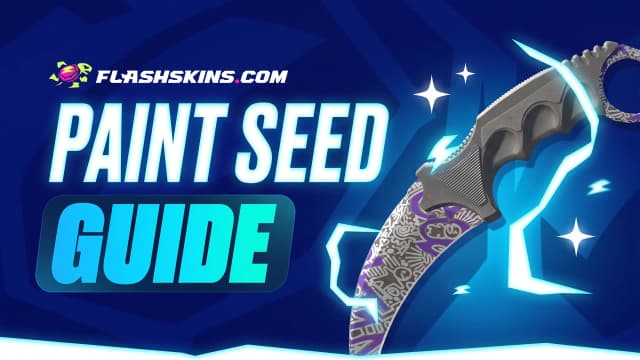
Pattern index, also called paint seed, influences how a pattern is applied in finishes that use variable texture distribution. The effect depends on the paint job and weapon model.
A higher seed number doesn't mean a better or more expensive pattern. It's an identifier, not a quality score.
Don't confuse it with paint index, the number identifying the finish itself. With Dopplers, this distinction matters: the finish variant and the color distribution are separate parameters.
Case Hardened and Blue Gem
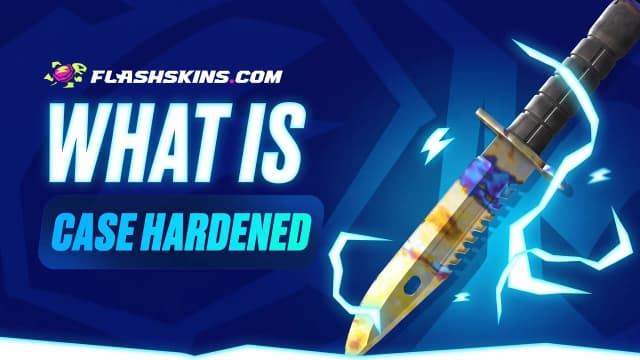
Case Hardened combines blue, gold, and other hues. Some seeds place especially desirable blue on visible weapon parts, which can attract collectors.
What counts is not just the amount of color, but also its placement, continuity, and appearance on the side visible during gameplay. Blue Gem classifications and community-created tiers can vary.
Protip: always check seed in the context of the specific model. A number valued on an AK-47 may not have similar significance on a Karambit or other knife.
Fade Percentage Isn't Float
Fade percentage describes a gradient variant resulting from the pattern. Float defines wear. One parameter doesn't replace the other.
For many knives, the community uses a Fade scale around 80-100%, but don't apply those same rules to all models and items. Percentage is an assessment used by tools and the community, not a separate Valve wear category.
Compare Fade percentage for the same model and using the same methodology. Minor reading differences between tools may result from calculation or rounding methods.
Marble Fade, Slaughter, and Other Patterns
Marble Fade can have desirable color layouts, including Fire & Ice on specific models. With Slaughter, some collectors focus on shapes visible in the pattern.
A catchy name given by a seller doesn't confirm a premium. You need comparable listings or transactions showing interest in that specific layout.
When browsing CS2 knives, start with the model and finish, then assess special pattern features.
Doppler Phases - Why Similar Names Don't Mean Similar Prices?
Phase and Seed Describe Different Properties
Doppler comes in several color variants. Phase defines the finish variant, while seed influences pattern distribution within it.
The seed number alone isn't enough to identify the phase. For pricing, you need both pieces of information plus the knife model.
Two Phase 2 knives may look different, but that doesn't make one a Sapphire or Ruby. A pattern difference doesn't change the variant's identity.
Main Doppler and Gamma Doppler Variants
| Family | Variant | Typical Appearance |
| Doppler | Phase 1 | Dark areas combined with red and purple |
| Doppler | Phase 2 | Distinct pink and purple presence |
| Doppler | Phase 3 | Dark base with blue and greenish tones |
| Doppler | Phase 4 | Stronger blue presence |
| Doppler | Ruby | Red gem variant |
| Doppler | Sapphire | Blue gem variant |
| Doppler | Black Pearl | Dark, opalescent variant with purple and blue tones |
| Gamma Doppler | Phase 1-4 | Various green arrangements, dark areas, and additional hues |
| Gamma Doppler | Emerald | Green gem variant |
Color perception depends on the model, seed, and in-game lighting. The table helps distinguish families but doesn't replace inspecting a specific copy.
No Single Price Ranking Exists for All Knives
Phase 2 often appeals to players wanting a pink loadout, while Phase 4 attracts those preferring blue. That doesn't mean an identical premium applies to every model.
Ruby, Sapphire, Black Pearl, and Emerald require separate comparisons. Their price order can depend on the knife, condition, availability, and current demand.
Protip: treat descriptions suggesting a regular phase resembles a gem variant as appearance descriptions. A knife that looks like an Emerald doesn't become one.
How Stickers Affect Skin Value
Unused Sticker Price Doesn't Transfer to Crafts Completely
An applied sticker becomes part of a specific copy. You can't recover it as an unused item for resale.
Don't automatically add the full sticker price to the base skin price. The premium depends on how attractive the full composition is and buyer interest in it.
What may matter is sticker type, condition, placement, count, and match to the weapon. An expensive sticker in a random spot doesn't necessarily create a valuable craft.
Placement and Condition Matter as Much as the Name
In CS2, stickers can be positioned and rotated, so pricing shouldn't rely solely on rigid slot divisions. Check visibility, how elements overlay, and any scratching.
A craft with four identical stickers can be desirable, but the number alone doesn't guarantee a premium. The overall appearance also matters.
For visual inspiration, see our roundup of best Holo stickers in CS2. An attractive holographic effect helps create a cohesive look, but doesn't determine resale value.
Compare Similar Crafts
For an unusual base item, the skin's base price is still a useful reference point. But it's not enough to value the collector component.
Look for examples with similar stickers, their condition, and placement. If such data doesn't exist, it's more honest to give a wide estimate range than one seemingly precise number.
StatTrak and Souvenir - Separate Variants, Separate Pricing
StatTrak Doesn't Have a Fixed Percentage Premium
StatTrak adds a kill counter, but doesn't improve weapon stats. This variant may have different supply and buyer interest than the standard version.
It often costs more, but don't apply one multiplier across the entire market. Compare the same model, finish, condition, and item features.
The number shown on the counter doesn't automatically carry collector value to the next owner.
Souvenir Requires Context Checking
With Souvenir, context can matter: the event, match, player, stickers, and how the item was created. Not all commemorative skins have the same origin.
During IEM Cologne 2026, Valve introduced the Souvenir-O-Matic, which could transform eligible owned weapons into commemorative versions with tournament stickers. You can't assume every Souvenir came from opening an older package.
The market name alone may not be enough to assess collector significance. Check the specific copy's features and don't assume new conversions are historical souvenirs.
Supply and Demand - What Happens Outside Skin Parameters?
Collection Helps Understand Availability
Two Classified skins can have completely different copy counts and sources. Collection age is only part of that information.
Stopping case production doesn't automatically stop items inside from being opened. Existing inventory can still be opened, and some items can also be obtained via trade-ups.
Don't treat "old collection" alone as sufficient pricing justification.
Few Listings Don't Necessarily Mean Few Copies
Owners might hold items in inventory and list them later. The visible listing count shows market availability at that moment, not total supply.
An item missing from one database doesn't mean it doesn't exist either. Public registries may not cover all inventories.
Popularity Doesn't Guarantee Fast Sales
A recognizable weapon and attractive look can draw many buyers. Yet a specific expensive craft or unusual pattern may still need a specialized buyer.
Liquidity, or ease of selling at an acceptable price, is a separate market trait. An item can be rare and valued, yet sell much slower than a standard playskin.
How to Estimate CS2 Skin Price Step by Step
Pricing Procedure for a Specific Copy
- Determine the weapon model, finish, and standard, StatTrak, or Souvenir variant.
- Check the wear category and full float value.
- Read the seed and for Dopplers, also confirm the phase.
- Inspect the item in-game, paying attention to the side visible during play.
- Assess stickers, their condition, and placement.
- Find several comparable listings if possible.
- Check comparable completed transactions, if you have reliable access to them.
- Compare prices in the same currency and similar settlement method.
- Account for fees and any withdrawal costs.
- Record the assessment date and a price range rather than assuming one fixed value.
For a standard playskin, some steps take moments. For a Blue Gem or expensive craft, finding truly comparable pieces may take the most time.
Separate Three Different Amounts
A listing price shows what the seller expects. A completed transaction price tells you what a specific buyer paid. The amount available after selling also depends on fees and settlement method.
Don't directly compare a Steam balance with withdrawable funds on an external platform. These are different forms of utility, even if both are shown in the same currency.
Protip: note which market each observation comes from. Mixing different types of prices in one average can distort valuation more than a small float difference.
How to Compare Skins on FlashSkins?
Check Available Listings and Item Features
On FlashSkins, you can browse CS2 skin listings and compare specific copies by price, wear condition, and float.
For finishes that depend on pattern, also check the exact appearance. If assessing a premium requires seed or phase confirmation, get that information before deciding.
Similar listing names don't guarantee similar collector value. This especially applies to Case Hardened, Fade, Dopplers, and elaborate crafts.
Buying and Quick Selling Address Different Needs
If you want a new skin for your loadout, compare available buy listings. If you need to offload unused skins, you can explore quick skin selling.
For exceptional float, pattern, or craft, compare the offered amount to data for similar copies. Don't assume every selling method applies the same collector premium.
After completing a sale, funds stay frozen in Piggy Bank for 8 days and unlock if the trade isn't reversed. Only then can you request a withdrawal following your selected method's terms.
Check Terms and Trade Details
FlashSkins doesn't require a separate account - you log in through Steam. Your Steam login credentials aren't stored by FlashSkins, and items transfer via Steam's trade system.
Before confirming a trade, check the recipient and contents. Item availability and funds settlement timing are separate concerns. Learn more about limitations in our guide on Steam trade lock.
Most Common Skin Pricing Mistakes
Assuming Rarer Always Means More Expensive
Covert doesn't guarantee a higher price than every Classified or Restricted. You also need to check availability, buyer interest, and specific features.
Paying Extra for Just a Number
A float with extra zeros or a recognizable seed number doesn't have identical value on every skin. A premium needs the context of the specific model and finish.
Treating Tiers as Official Guarantees
Terms like "Tier 1," "max blue," or "fake gem" may come from different community classifications. Check who created the tier system and what features it actually describes.
Adding Full Sticker Value
An expensive sticker doesn't automatically turn cheaper weapon into an item worth both prices combined. Compare the craft to other crafts, not just unused sticker listings.
Basing Valuation on One Screenshot
An image might not show wear, actual color layout, or the other side. Older materials may also show appearance from before rendering changes.
For a costly purchase, inspecting the specific copy is far more useful than promotional artwork of the entire finish.
Our Take
We'd First Check What We're Actually Paying For
For a standard playskin, we'd start with appearance, variant, float, and a few comparable listings. We wouldn't hunt for an extra zero just because it sounds good in the description.
For a pricier item, we'd slow down. Case Hardened means checking the seed, Doppler means confirming the phase, and an older craft means reviewing the stickers and similar compositions.
For us, a good purchase is one where we can explain the premium. "Discord says it's rare" would be the start of research, not a reason to click confirm.
FAQ - CS2 Skin Price, Float, and Pattern
What Most Affects CS2 Skin Price?
It depends on the item. What matters can include finish, availability, demand, variant, float, pattern, phase, and stickers.
Does Covert Always Cost More Than Classified?
No. Official rarity isn't a market price ranking. A lower-tier skin can be harder to find or more wanted.
Does Skin Wear Change During Gameplay?
No. Playing with a weapon or trading it doesn't change its float or condition tier.
Does Lower Float Always Mean Higher Price?
No. What matters is how the specific finish looks, supply, and buyer interest. Some highly worn copies also have collector value.
Do Pattern Index and Paint Index Mean the Same Thing?
No. Pattern index, or seed, refers to a pattern distribution variant. Paint index identifies the finish.
Is a Known Seed Valuable on Every Weapon?
No. A number only matters combined with the specific model and finish. Don't transfer Blue Gem classifications between different items.
Does 100% Fade Mean 0.00 Float?
No. Fade percentage describes a gradient tied to pattern, while float defines wear.
Which Doppler Phase Is Most Expensive?
There's no single answer for all models. Compare the same knife, variant, condition, and current listings or transactions.
Do Stickers Increase Skin Value by Their Full Price?
Not automatically. The premium depends on their type, condition, placement, and overall craft appeal.
Does the Cheapest Listing Show My Item's Value?
It can be a reference for a standard version, but doesn't account for every special feature. It's also not a guarantee of what you'll get after selling and fees.
CS2 Skin Price - Compare Features, Not Just Names
Good Valuation Starts With Proper Comparison
CS2 skin price depends on which item you're assessing, what makes that specific copy stand out, and what buyers will actually pay. Float, pattern, phase, and stickers only matter in the context of your specific market.
Here's the trap mentioned in the introduction: a high listing price doesn't mean you'll get that amount for your own skin. Separate seller expectations from confirmed transactions and post-settlement proceeds.
Check FlashSkins listings, compare similar copies, and choose to buy or sell based on your goal. Most importantly, know what feature you're paying for before the transaction, and whether it truly has value for you.

I am a veteran player with over 20 years of experience, having been part of the Counter-Strike community since the early days of 1.6. As an expert in virtual economy and gameplay mechanics, I help you reach the next level by creating technical guides and tactical breakdowns, while providing data-driven insights into the CS2 skin market and sticker investments.